Prevent temporary staff no-shows with clear communication
To prevent temporary staff no shows, make shift details clear, confirm attendance before the start, and act promptly if a worker does not arrive. A missed shift leaves an agency and client little time to arrange cover, particularly in care and nursing.
A no-call no-show occurs when a worker misses a shift without notifying you that they cannot attend. Clear reporting instructions help distinguish this from a late arrival or a clock-in problem, so you can respond calmly and consistently.
This guide explains how to identify a missed shift, contact the worker and record what happened. It also covers practical ways to assess reliability and keep staff informed about shift details, changes and reminders. Communication cannot prevent every absence, but it can help you find out sooner and arrange cover with less last-minute chasing.
Key Takeaways
- Distinguish a no-show from a late arrival or a clock-in problem before arranging cover.
- Set up standby cover and a clear response process so you can act quickly when a worker misses a shift.
- Use attendance records to spot patterns and guide fair, consistent conversations about reliability.
- Keep shift details and changes clear, and give temporary staff an easy way to tell you they cannot attend.
1. What is a Missed Shift?
A missed shift occurs when a booked worker fails to arrive at the agreed time. A no-call no-show is a missed shift without notice that the worker cannot attend. Check the rota and booking details first, then contact the worker to distinguish an absence from lateness or a clock-in problem.
Neither temporary staffing nor direct hiring guarantees reliable attendance. An agency can draw on a wider pool of workers and arrange replacement cover, while direct hiring relies on the organisation’s own staff. In either case, clear shift details, suitable workers and prompt communication affect whether someone turns up.
Temporary workers may miss shifts because of illness, injury or family emergencies. Vague role details, inflexible hours and unclear expectations can also lead someone to back out. Delayed contact after onboarding may weaken commitment, so confirm the role, location and reporting process when booking the shift.
Absence can mean more than missing a whole shift. It may include repeated lateness, leaving early without approval, or taking leave without following the agreed procedure. Set out in an absence policy how workers should report a problem, who to contact and what happens next. Apply the process consistently, record each incident and discuss possible causes before deciding how to respond.
A missed care shift can leave a client short-staffed, while an absence in logistics can delay orders or increase pressure on colleagues. To reduce disruption, maintain a standby pool of suitable workers, identify who can cover each role, and keep availability and contact details current. If someone does not arrive, contact them, alert the client and offer the shift to available standby workers. Reallocating work may also help, but only if colleagues have the right skills and the change is workable. Reviewing absence patterns can reveal recurring issues with a role, shift details or communication.
2. Confirming and communicating about a no-show
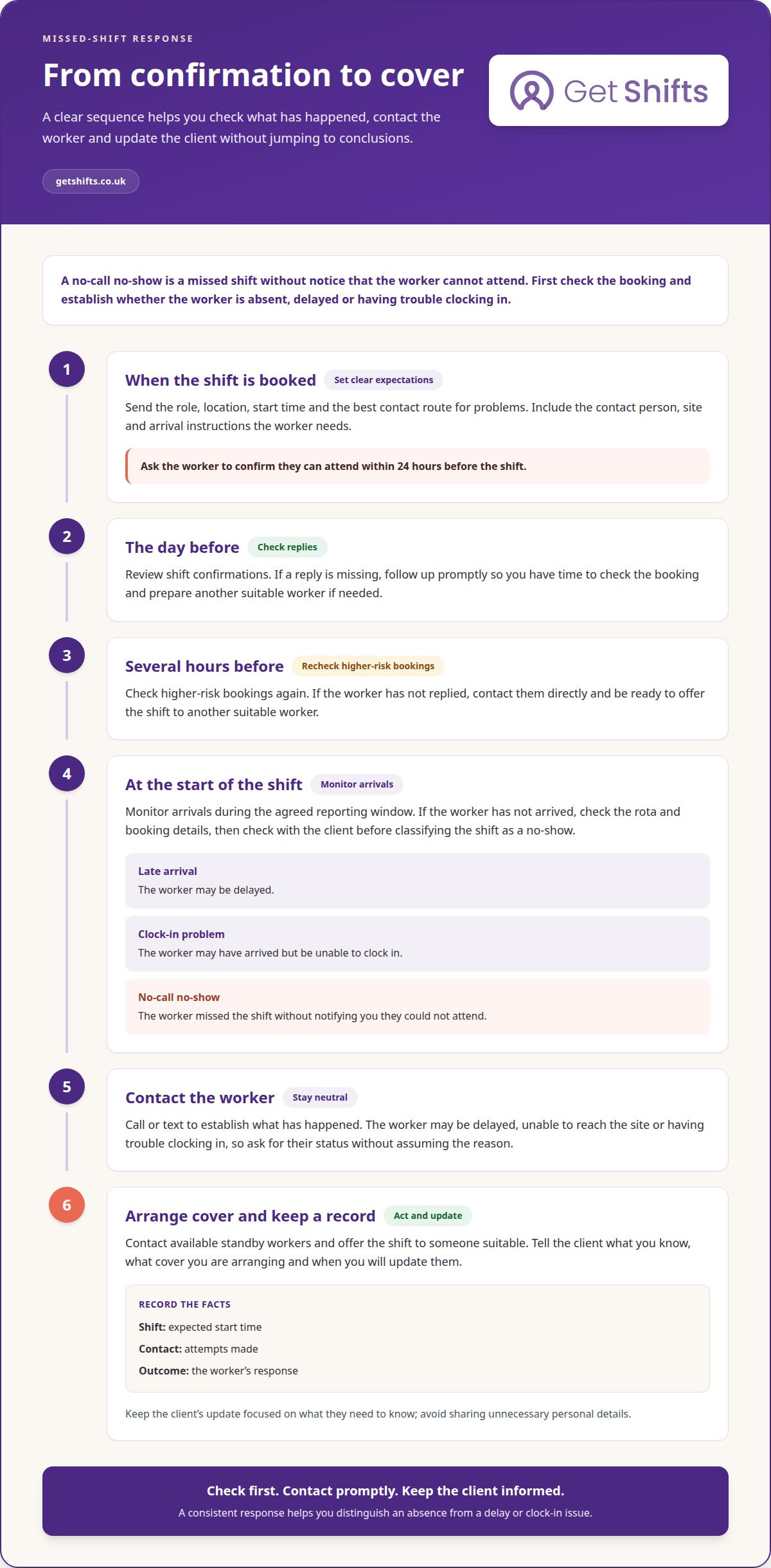
Clear confirmation gives you time to respond before an uncovered shift affects the client. Ask workers to confirm they can attend within 24 hours before each shift, then follow up promptly if a reply is missing. A booking message should state the role, location, start time and the best contact route for problems.
Use a simple sequence: review confirmations the day before, check higher-risk bookings again several hours before the start, then monitor arrivals during the agreed reporting window. Daily check-ins or morning roll calls can help with urgent placements. If a worker has not replied, contact them directly and prepare to offer the shift to another suitable worker.
If someone does not arrive, establish what has happened before marking the shift as a no-show. Check with the client, then contact the worker by phone or text. They may be delayed, unable to reach the site or having trouble clocking in. A brief, neutral message can confirm their status without assuming the reason.
Record the shift, expected start time, contact attempts and the worker’s response. This gives the workforce team a clear account and helps identify patterns across bookings. Tell the client what you know, what cover you are arranging and when you will update them. Avoid sharing personal details the client does not need.
After a missed shift, speak with the worker to understand what happened. Clarify how to give notice next time and explain how repeated absences will be handled under your policy. Apply the process consistently. Recognising reliable attendance can also reward workers who communicate early and help protect cover.
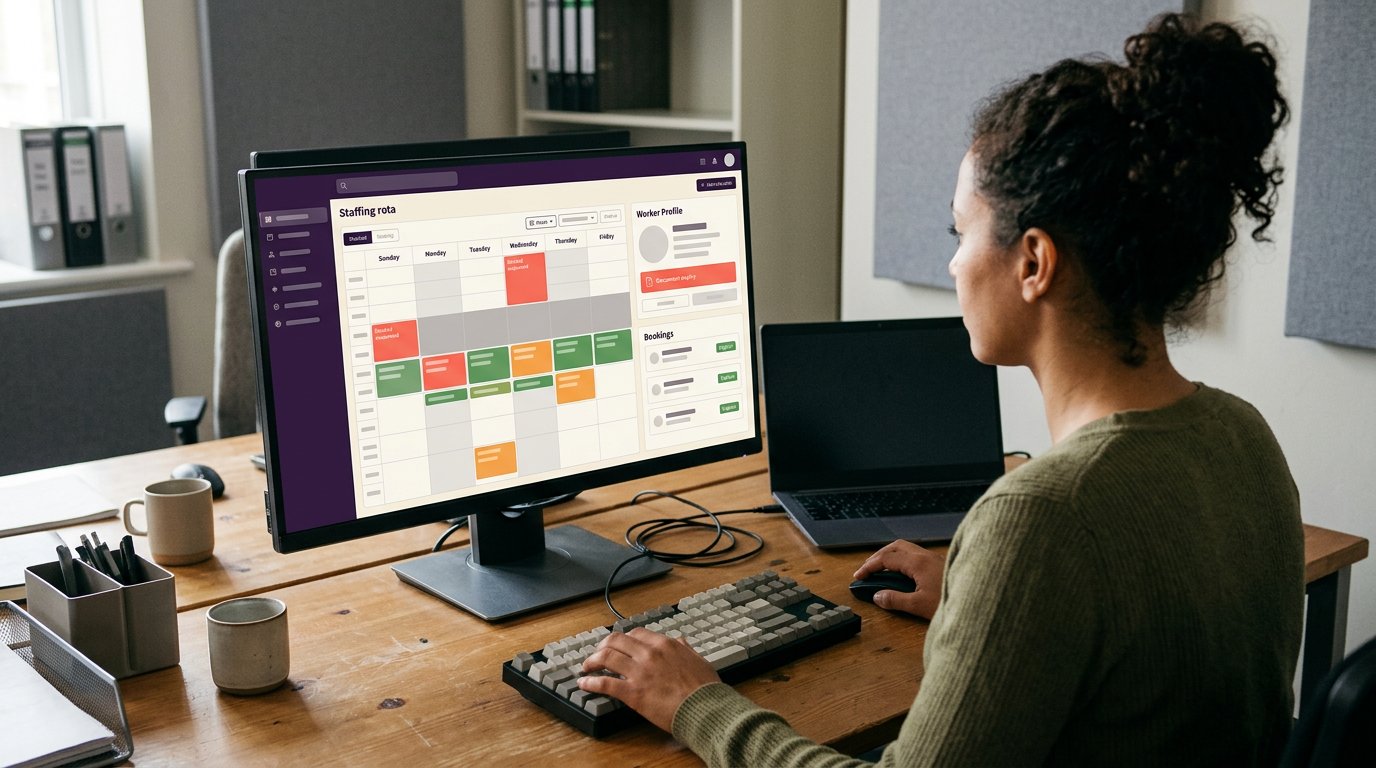
A shared shift booking and rota process can keep confirmations and changes together, rather than scattered across calls and messages. Use it to make responsibilities clear, not to replace a direct conversation when a worker misses a shift.
3. Screening for reliability and punctuality
Reduce missed shifts by matching workers to roles they can do, setting expectations early and reviewing attendance records. Clear screening and shift matching can help prevent temporary staff no-shows, but cannot guarantee attendance.
During enrolment, discuss the practical demands of the role. For a care placement, clarify the setting, duties and shift pattern. For a logistics role, confirm the location, start time and physical requirements. Ask how the worker plans to travel and what could affect punctuality. These details can reveal a mismatch before you confirm the booking.
Use evidence from previous assignments rather than relying on a general impression. Review whether the worker arrived on time, completed booked shifts and gave notice when plans changed. Record factual examples, such as a late arrival or early cancellation. A consistent record helps distinguish an isolated issue from a recurring pattern.
Compare attendance history with each shift’s demands. If a worker has repeatedly missed time-critical bookings, speak with them before offering another similar placement. Ask what happened and whether shift times, location or communication played a part. Apply the same process across your workforce, keeping the conversation focused on recorded behaviour.
Reliability also depends on commitment and fit. Give new workers a clear briefing before their first shift, including who to contact if they cannot attend. After an assignment, gather specific feedback from the client and worker. Use it to improve future matches, rather than making assumptions about someone’s suitability for every role.
Assess skills and attendance separately. A worker may have the right experience but be unavailable for a particular rota pattern. Review both before confirming a booking, then track attendance and notice patterns over time. This gives your operation a practical basis for offering suitable shifts and planning cover. Better matching can help prevent temporary staff no-shows by addressing avoidable clashes before a shift is booked.
4. Keeping temporary staff updated
Send shift details as soon as a booking is agreed, then repeat the key information before work begins. A clear message should cover the role, start time, site address, contact person, travel arrangements and required equipment. For example, a care worker needs the correct home entrance and handover contact, while a logistics worker needs the depot location and arrival instructions.
The Scottish Government guidance refers to giving staff shifts at least 4 weeks ahead and paying for cancelled shifts within that period. Check the current guidance for its details. Early notice gives workers more time to plan travel and manage other commitments. If a client changes a shift, explain what changed and when the new details take effect.
Use a consistent reminder sequence, rather than relying on one booking message. Send an immediate confirmation, a preparation message 48 hours ahead, a reminder the night before, then a morning check-in where useful. Each message should repeat the shift date, start time and location, so the worker can spot a problem before setting off.
Give workers a simple way to report a clash or cancellation. A quick text reply or in-app message lets them explain the issue early, giving the agency time to arrange a replacement. Tell them who will read the message and how to flag an urgent problem, especially for early care shifts or time-sensitive logistics work.
Keep updates in one clear communication thread where possible. If a phone call changes the start time, send a written summary straight afterwards. Ask the worker to acknowledge important changes, then update the client with the agreed details. A platform that keeps booking messages and shift information together can reduce confusion when several agencies and client contacts are involved.
Scheduling apps can notify staff about updates and let them report conflicts, but last-minute changes may disrupt schedules or expectations. A worker who has had no contact for four days is materially less likely to arrive.
Get Shifts: No-Show Detection & Attendance Alerts
Get Shifts’ No-Show Detection & Attendance Alerts help your agency identify missed shifts and respond sooner. They are a practical next step when manual checks across rotas, calls and messages make attendance harder to track.
Use the alerts to bring potential attendance issues to your team’s attention, then follow up with the worker and client. Your staff can focus on confirming what happened and deciding what to do next, rather than relying on a timesheet to reveal an absence later. Get Shifts also brings shift booking and rota management together in one staffing agency management platform.
If you want a clearer way to manage attendance across agency shifts, contact Get Shifts to discuss your requirements.
Make attendance easier to manage
Build a calmer way to manage attendance into your agency’s next operational improvement; a clear view of what needs attention can help prevent temporary staff no-shows from becoming a daily distraction. Contact Get Shifts today to discuss your agency’s needs and take a considered next step.
Frequently Asked Questions
What is a Missed Shift?
A missed shift concerns a worker’s confirmed assignment, not simply an empty place on the rota. If a shift was still open and nobody had accepted it, no booked worker has failed to attend. Recording that distinction helps agencies separate a coverage gap from an attendance incident when reviewing reports or discussing a booking with a client.
What is a No Call, No Show?
A no-call, no-show describes a worker who does not attend and has not notified the agency or client about the absence. The label describes what was observed, not why it happened. Keep the initial record neutral, such as “not present at start time; no message received”, then update it if the worker later explains the circumstances.
What confirmation and reminder process prevents temp staff no-shows?
Make each confirmation easy to answer and act on. Ask workers to reply with a clear status, such as confirmed, unable to attend or needs clarification. This gives coordinators a useful list of unresolved bookings instead of a thread of ambiguous replies. Use one agreed communication channel for changes, so workers can find current shift information without comparing conflicting messages.
How should an agency handle a temporary worker who does not show up?
Follow the client’s escalation process for the site and role, particularly where a care handover or security post needs prompt attention. Tell the client what action is under way without sharing unnecessary personal details. If you arrange cover, confirm that the replacement understands the role and site requirements before the client relies on them to take over.
What should a UK agency worker contract say about cancelling or missing a shift?
Requirements can depend on the contractual arrangement and the circumstances. For a specific case, check current official guidance or seek appropriate professional advice.
What are UK employers’ legal obligations when a temporary worker fails to attend?
Obligations can depend on the contractual arrangement, the worker’s status and the circumstances. The UK Government’s guidance on worker status provides information about worker status. For a specific case, check current official guidance or seek appropriate professional advice.